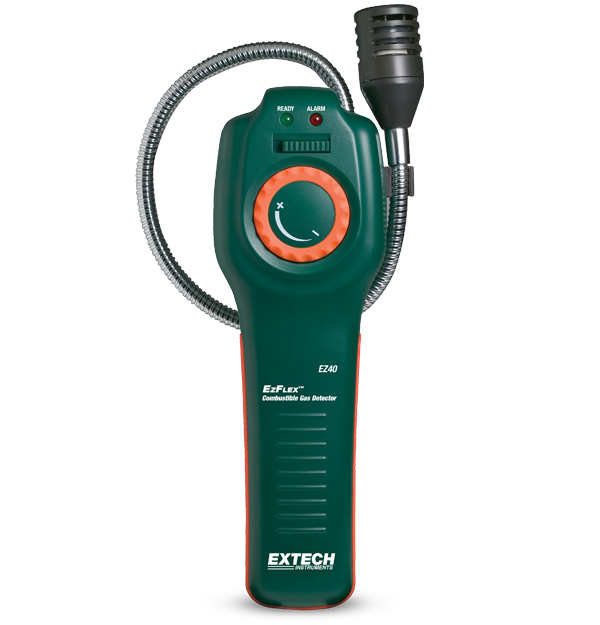
EzFlex™ Combustible Gas Detector (EZ40)
The Extech EZ40 EzFlex Combustible Gas Detector has a 16 inch gooseneck for easy access into hard to reach locations. Detector has a high sensitivity and a one hand operation with thumb controlled sensitivity adjustments to eliminate the background gas le
Product Overview
The Extech EZ40 EzFlex Combustible Gas Detector has a 16 inch gooseneck for easy access into hard to reach locations. Detector has a high sensitivity and a one hand operation with thumb controlled sensitivity adjustments to eliminate the background gas le
The Extech EZ40 EzFlex Combustible Gas Detector
has a 16 inch gooseneck for easy access into hard
to reach locations.
Detector has a high sensitivity and a one hand
operation with thumb controlled sensitivity
adjustments to eliminate the background gas levels.
It has a visible and audible alarm at 10%
(LEL) lower explosive limited for methane.
This gas detector will help you locate
the smallest leaks.
Complete with 3 C batteries.
For more details please refer datasheet.
Technical Specifications
The Extech EZ40 EzFlex Combustible Gas Detector
has a 16 inch gooseneck for easy access into hard
to reach locations.
Detector has a high sensitivity and a one hand
operation with thumb controlled sensitivity
adjustments to eliminate the background gas levels.
It has a visible and audible alarm at 10%
(LEL) lower explosive limited for methane.
This gas detector will help you locate
the smallest leaks.
Complete with 3 C batteries.
For more details please refer datasheet.
Talk To Our Technical Experts
Related Products
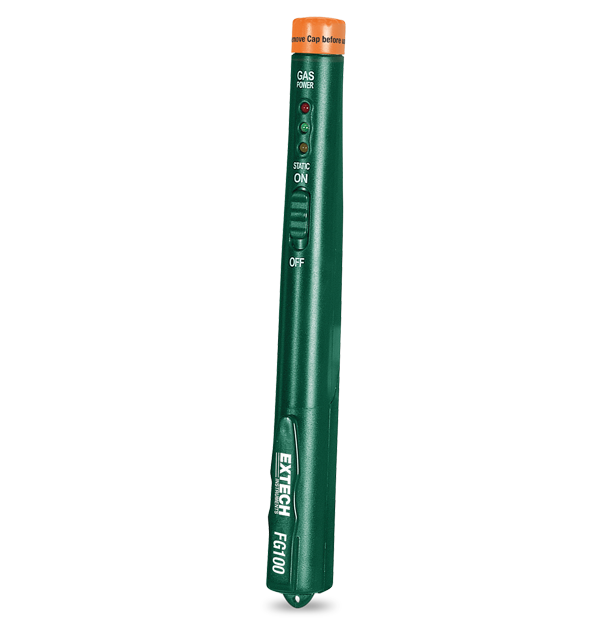
Combustible Gas Leak Detector (FG100)
The FG100 is a Combustible Gas Leak Detector. Detects combustible gases Liquefied Natural Gas (LNG) and Liquefied Propane Gas (LPG) from 500 to 6500 PPM.
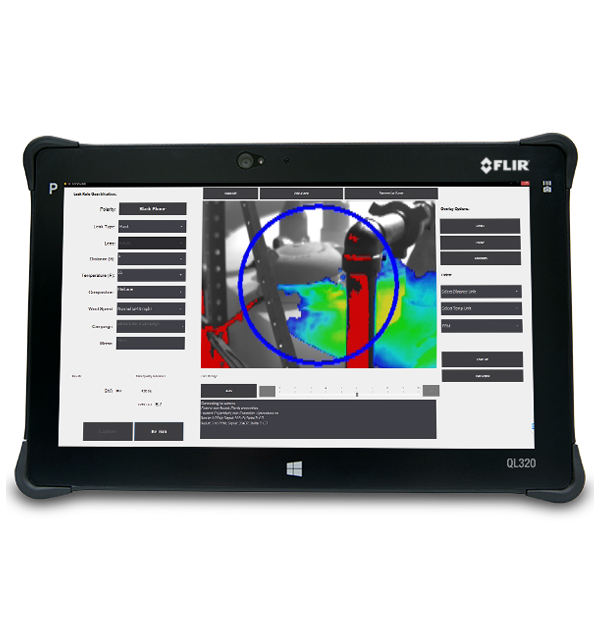
Quantitative Optical Gas Imaging System for GF620/GFx320/GF320 (QL320)
The QL320 is a quantitative optical gas imaging (QOGI) system that allows surveyors to measure the leak rates for methane and other hydrocarbons.
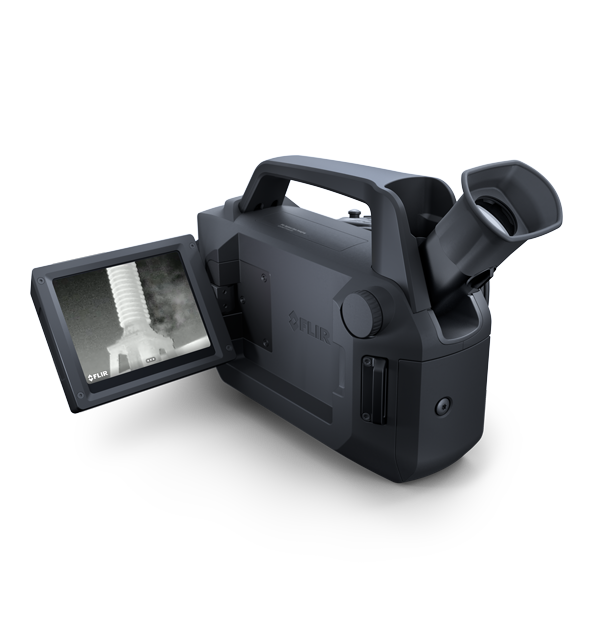
Optical Gas Imaging (OGI) Camera for Sulfur Hexafluoride (SF?) (G306)
The FLIR G306 is an innovative Optical Gas Imaging (OGI) camera used to visualize sulfur hexafluoride (SF₆), ammonia (NH), ethylene (C₂H₄), and other industrial gas leaks in various environments.
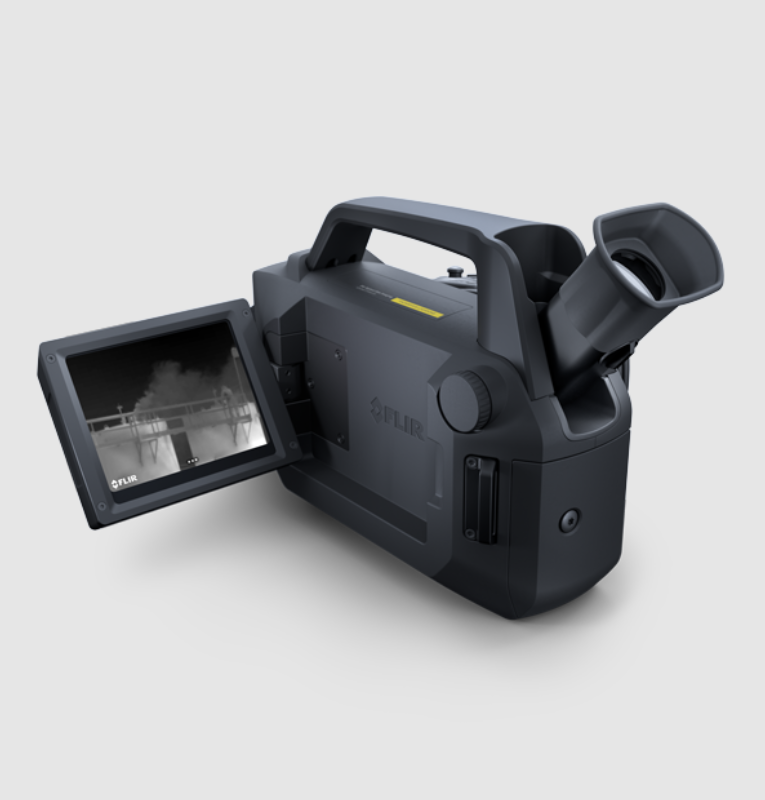
Optical Gas Imaging (OGI) Cameras for Hydrocarbons (G-Series)
The FLIR Gx320, G620, and Gx620 are innovative Optical Gas Imaging (OGI) cameras designed to detect hydrocarbons, methane (CH₄), and other Volatile Organic Compound (VOC) emissions from multiple stages of the oil and gas supply chain, as well as other ind